The challenge
Opus is part of Bankside Yards, one of the UK’s most ambitious mixed-use developments, designed to be “the UK’s first fossil fuel-free major mixed-use development in operation.”
To support this ambition, the project adopted an ambient loop water source heat pump (WSHP) strategy. While technically sound, this approach introduced a number of design and spatial challenges at apartment level.
The most pressing issue was space: using traditional installation methods, there wasn’t sufficient room within the utility cupboards to accommodate the ancillary equipment required for the WSHP system, particularly the buffer vessel. This challenge was compounded by a high variety of apartment layouts and cupboard sizes across the building, which limited the viability of a one-size-fits-all solution.
Alongside these constraints, the solution had to comply fully with Daikin’s minimum installation and service requirements, G3 regulations, and wider statutory standards.
The solution
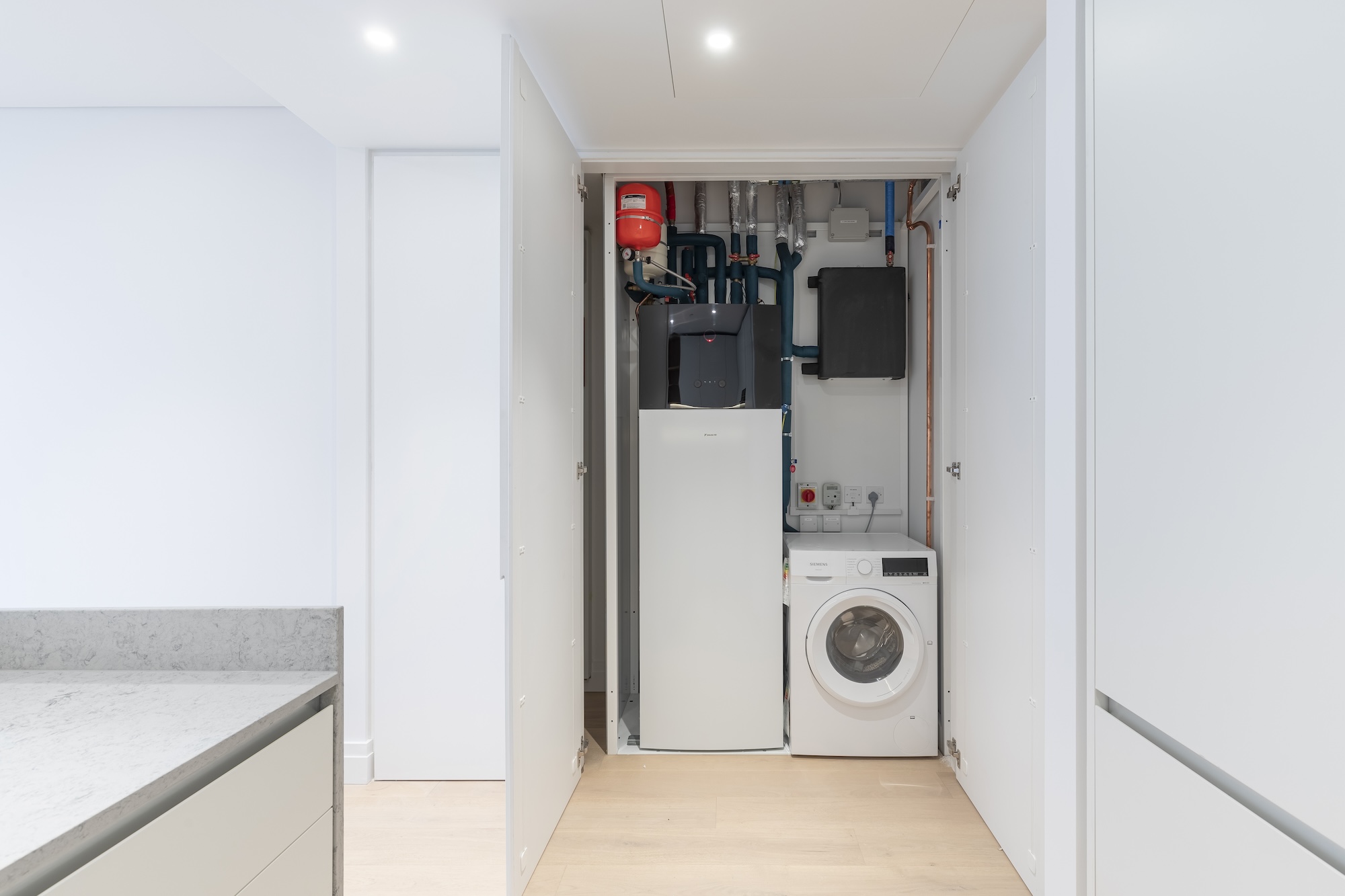
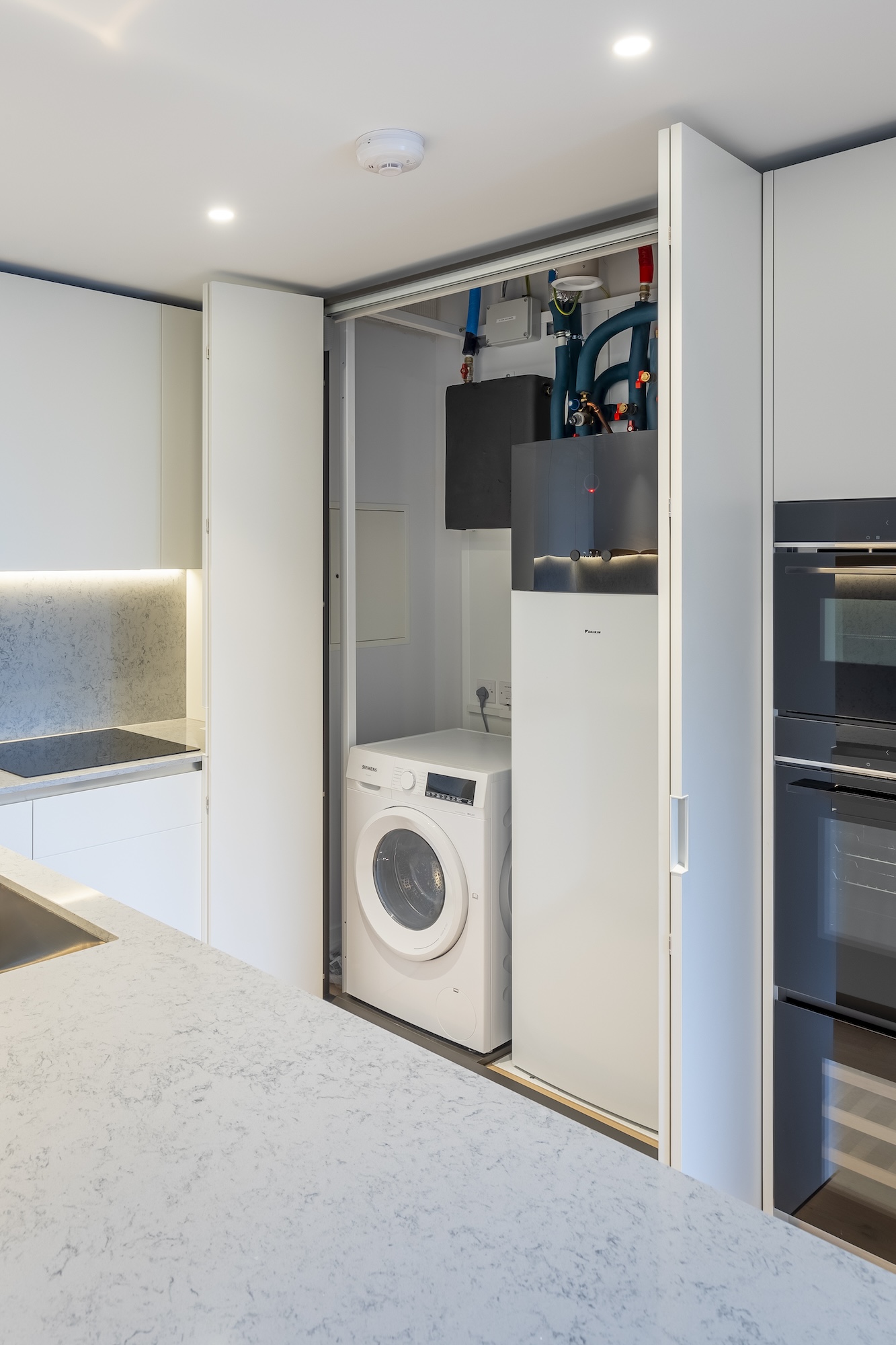
Resipoint worked in close collaboration with the project team to develop a prefabricated utility room strategy tailored to the specific challenges of Opus.
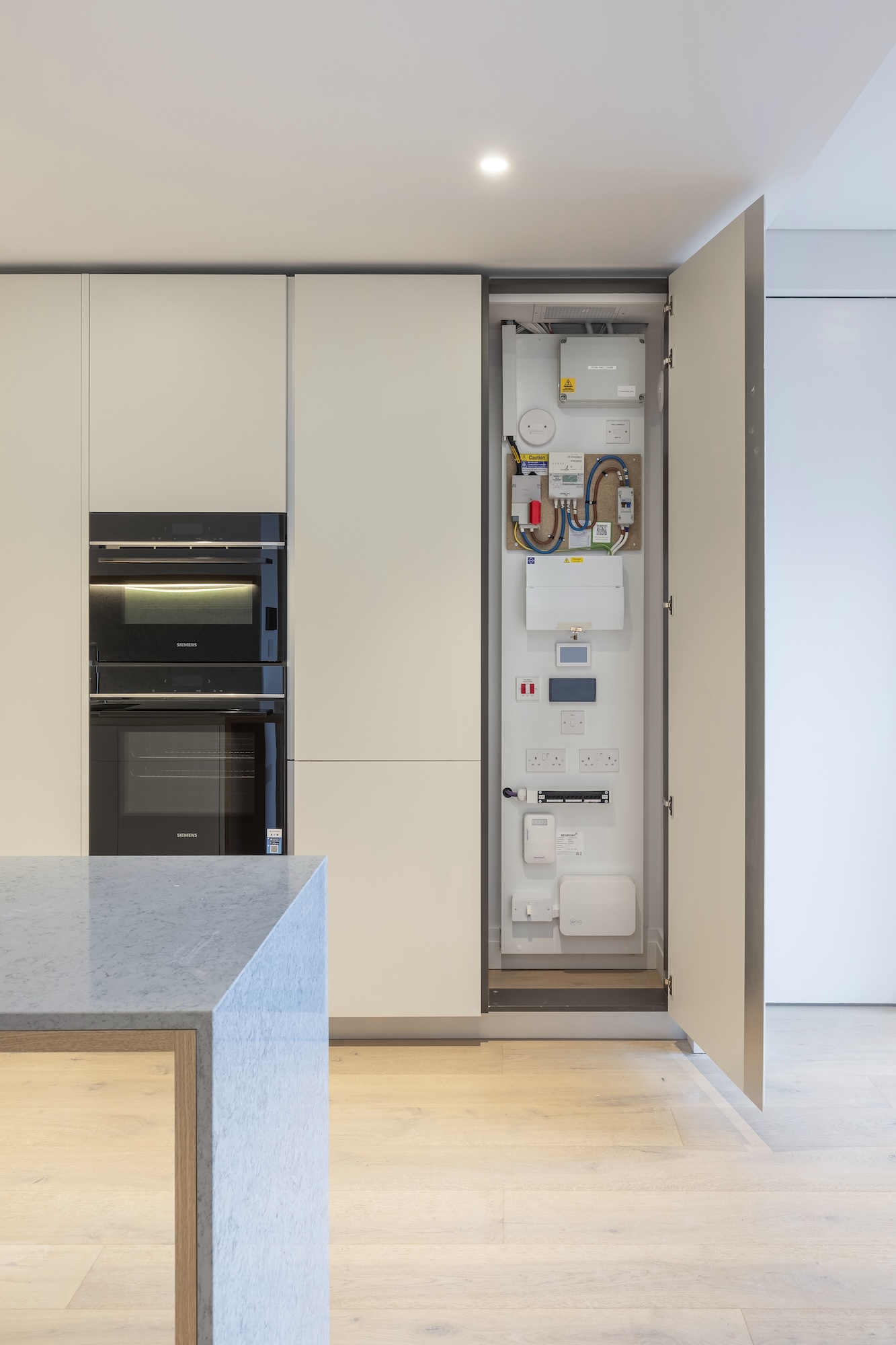
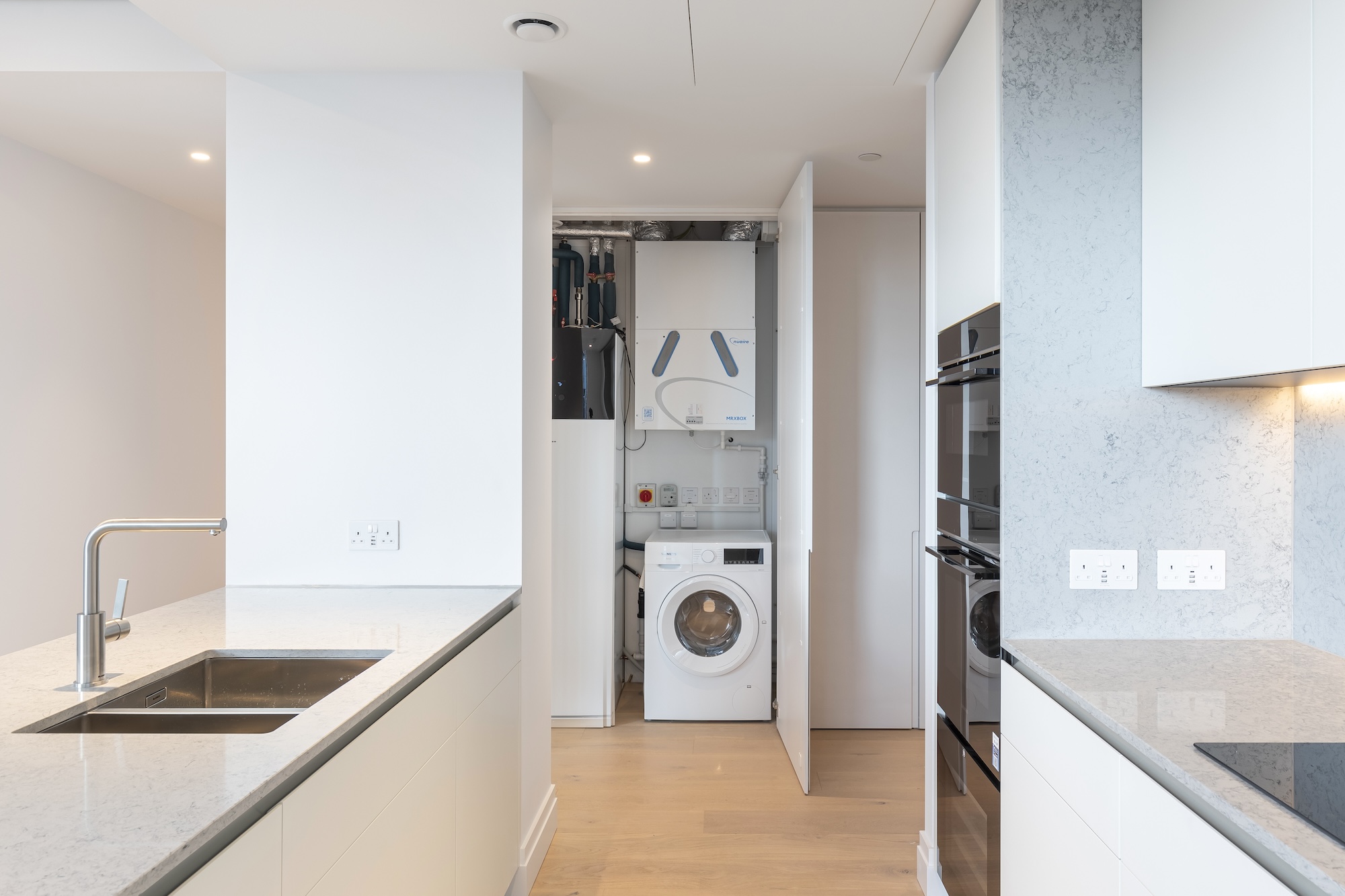
Rather than a single fixed design, Resipoint engineered three core mechanical utility room configurations, supported by a range of separate electrical panels that could be positioned flexibly depending on individual apartment layouts. This modular approach allowed standardised M&E quality and seamless integration without sacrificing adaptability across different unit types.
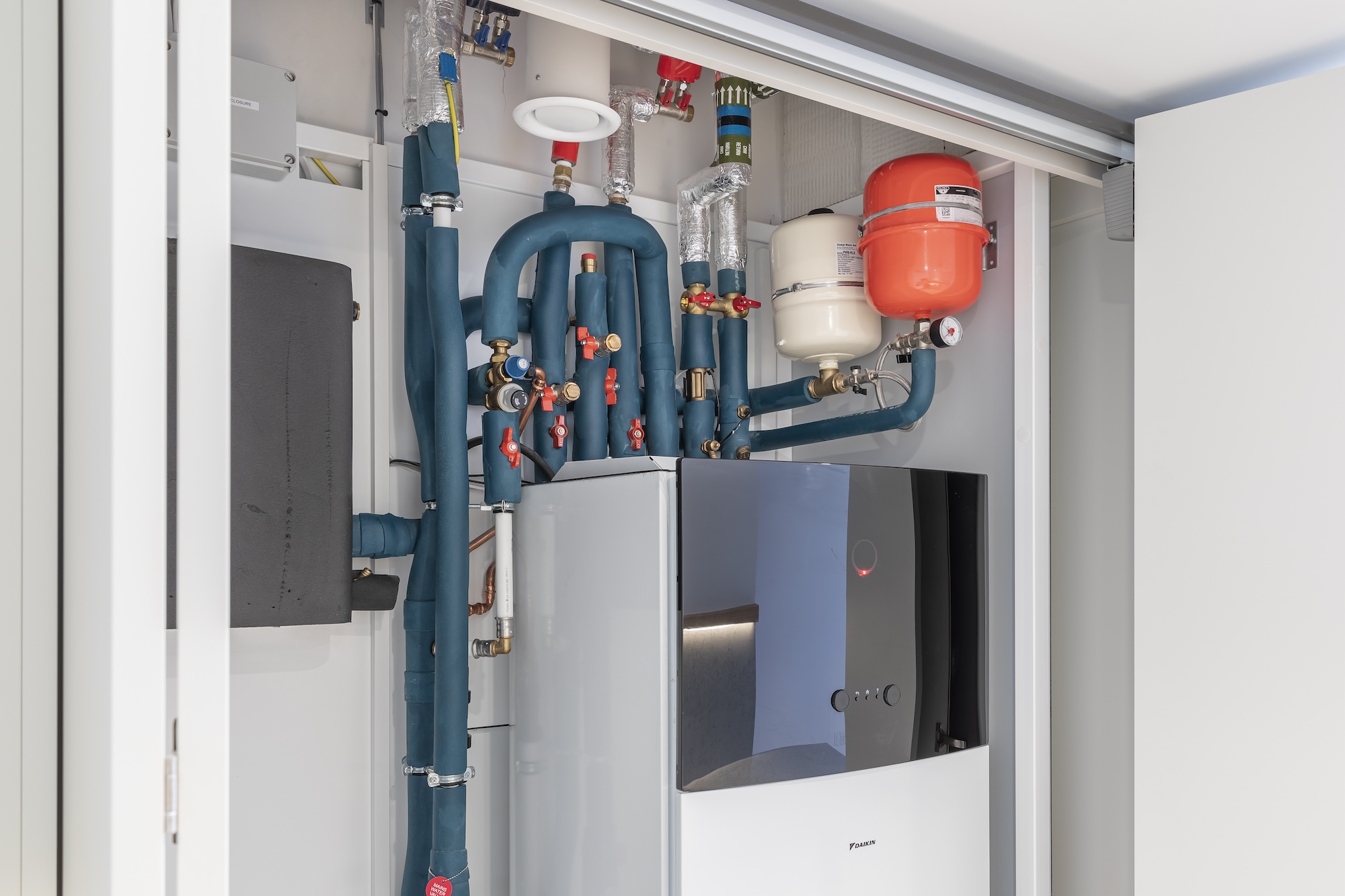
A critical factor in reducing the overall footprint was the complex pipe bending that was achieved thanks to Resipoint’s in-house CNC technology. This minimised space requirements and allowed a level of pipework precision that would be extremely difficult to replicate at scale with traditional on-site methods.
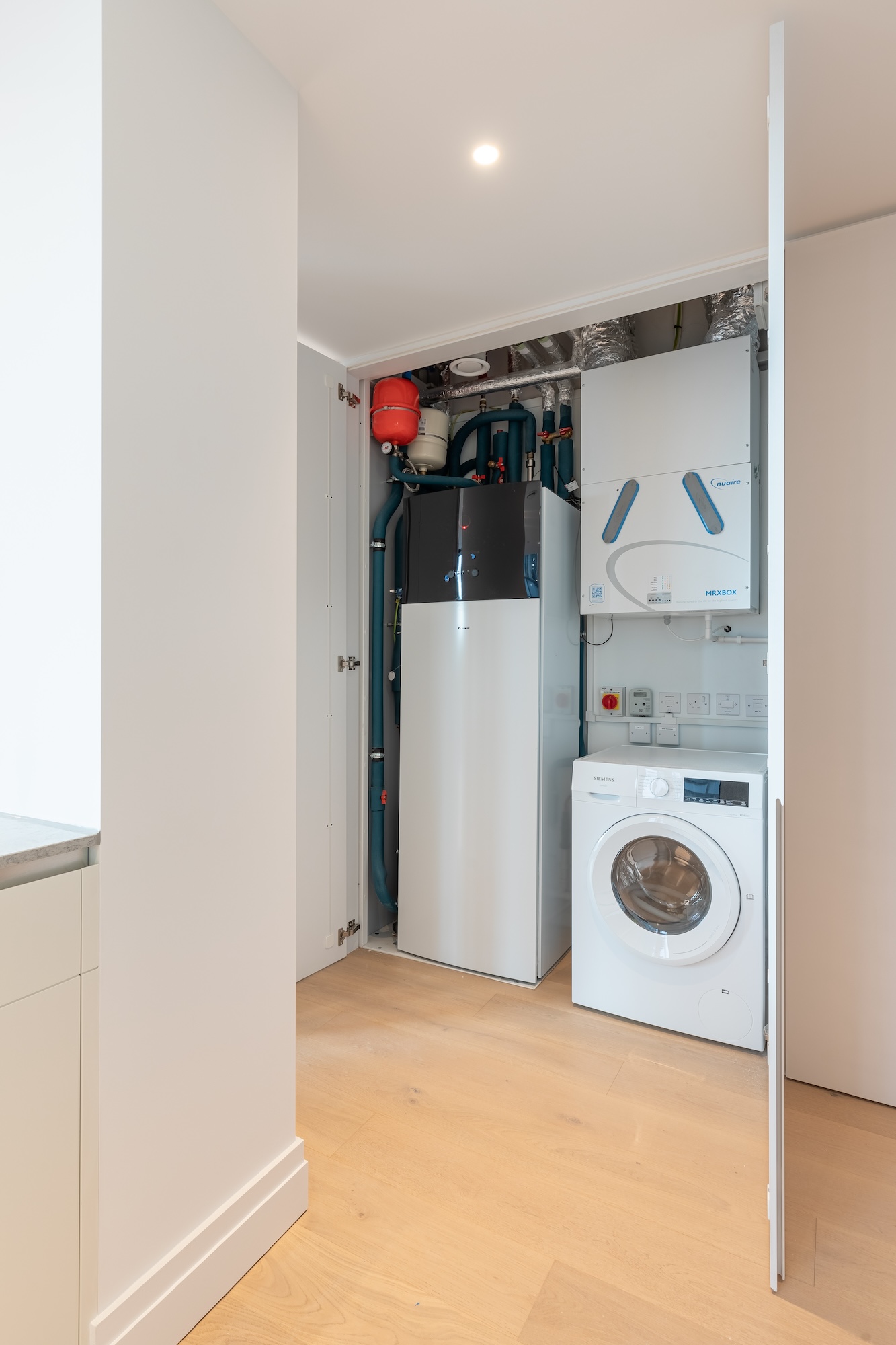
Additionally, Resipoint designed and manufactured a bespoke slimline 20-litre buffer vessel, engineered to sit alongside the WSHP within the available cupboard footprint – something that would not have been achievable using off-the-shelf components.
In apartments where the utility cupboard formed part of a larger room, Resipoint introduced a removable front transport post to enable safer and easier installation on site.
Prefabricated utility room components included:
Mechanical (Type 1)
- Daikin Altherma WSHP
- Nuaire ECO2 MVHR with attenuator box
- Bespoke Resipoint 20-litre buffer vessel
- G3 kit and expansion vessel
- Heat meter and flow sensor
- Magnetic water conditioner
- Mains isolation valve
- Washing machine water supply and waste provision
- Condensate pipework for MVHR and WSHP
- WSHP isolator and electrical switching accessories
Mechanical (Type 2)
- Daikin Altherma WSHP
- Bespoke Resipoint 20-litre buffer vessel
- G3 kit and expansion vessel
- Heat meter and flow sensor
- Magnetic water conditioner
- Mains isolation valve
- Washing machine provision
- WSHP isolator and electrical switching accessories
Mechanical (Type 3)
- Daikin Altherma WSHP
- Bespoke Resipoint 20-litre buffer vessel
- G3 kit and expansion vessel
- Heat meter and flow sensor
- Magnetic water conditioner
- Mains isolation valve
- WSHP isolator
Electrical panels
- 16-way consumer unit
- Meter board and fused cut-off switch
- Smoke detector and hush switch
- BMS control system
- Underfloor heating controllers
- Provision for BT ONT, Hyperoptic router, Virgin Media ONT and ITB
- Electrical sockets and switching accessories
The results
Resipoint’s prefabricated utility rooms enabled the WSHP systems and ancillary equipment to physically fit within the apartments, something otherwise unachievable with traditional installation methods.
In particular, Resipoint helped the project team:
- Solve critical space constraints without redesigning apartment layouts
- Maintain compliance with manufacturer and regulatory requirements
- Reduce the technical risk associated with a new ambient loop WSHP strategy by factory-building and testing each system before delivery
- Ensure consistent M&E quality despite the complexity of the installation, which would have been difficult to achieve at scale with traditional on-site methods
The solution also supported the wider sustainability ambitions of the development, while providing a practical, standardised approach to complex M&E integration.
Discover how Resipoint can support your next project.
GET IN TOUCH




 23 December 2025